For a year I tried writing my newsletter the night before it was due. It worked, technically, the same way climbing a mountain in flip-flops works. By Friday afternoons I was anxious, by Friday nights I was tired, and by Saturday I was vaguely resentful of the hobby I had once loved.
The fix wasn't a better content idea, a smarter prompt, or a fancier editor. It was changing when and how the work happened. Specifically, it was learning to batch — to do all the writing for three weeks of content in a single five-hour Saturday morning session.
Why daily writing burns most creators out
Writing is a context-heavy activity. You don't just sit down and type words. You re-immerse in your topic, find your voice, remember the audience, build flow. Each fresh start costs 20–40 minutes of warm-up before any real writing happens. If you write daily, you pay this warm-up cost every single day.
Batching pays it once. The same three pieces that took six hours scattered across the week take three hours in a single sitting. You're already warm. You're already in the voice. The math is wildly in your favor.
The 5-hour Saturday batching block
Here's the schedule, broken down. Adjust the start time to whatever fits your life — the structure matters more than the clock.
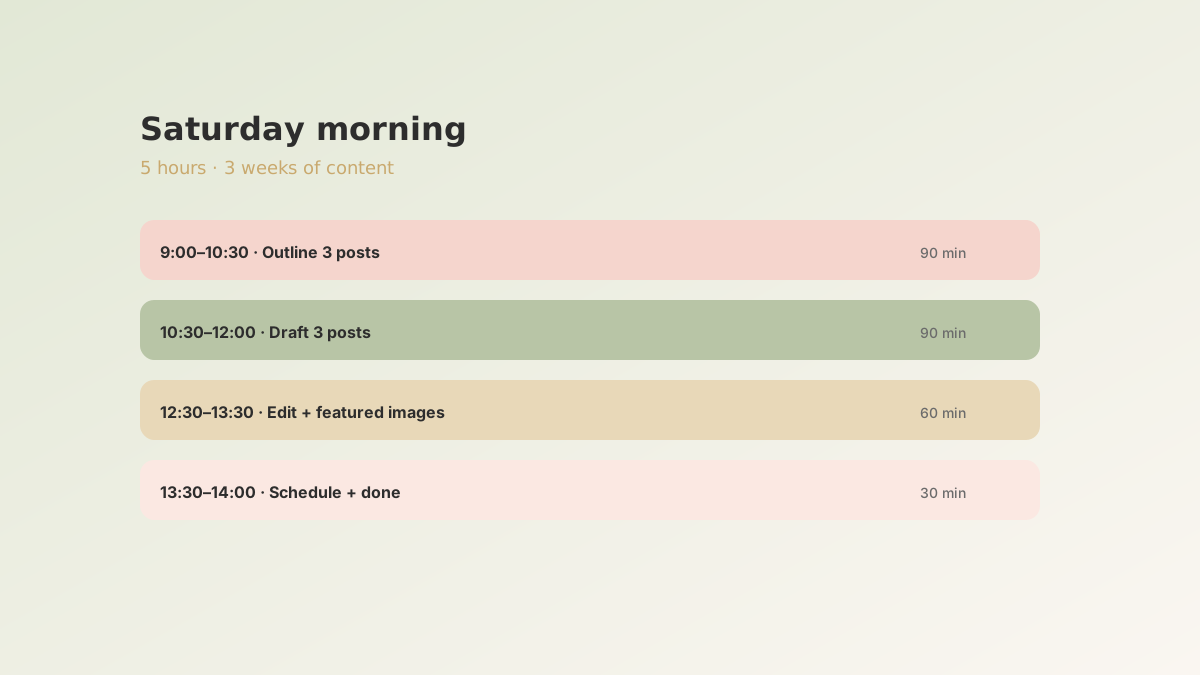
9:00–10:30 — Outline 3 posts (90 min)
Don't write yet. Open three blank documents. Write a one-sentence promise for each, three to five sub-headings under each, and bullet-point the key arguments under each sub-heading. The goal is to leave nothing for the writing brain to figure out.
10:30–12:00 — Draft 3 posts (90 min)
Now write. Headphones on, music with no lyrics, do not stop to edit. The outlines from step one mean you're filling in scaffolding rather than inventing structure. 30 minutes per draft is achievable when the thinking is already done.
12:00–12:30 — Lunch break (30 min)
Real lunch. Outside if possible. No screens. The break is non-negotiable — the next two hours are the difference between good content and great content.
12:30–13:30 — Edit + featured images (60 min)
Read each draft out loud. Cut 15% of the words. Pick or generate a featured image for each. This is the polish phase that takes drafts from passable to publishable.
13:30–14:00 — Schedule + done (30 min)
Upload, schedule, set publication times for the next three weeks. Close the laptop. The day is yours.
Total: five hours. Output: three weeks of content.
What makes batching actually work
Three things separate a batching routine that holds for years from one you abandon by week three:
1. Same time, same place, every week
Your brain learns the rhythm. Saturday at 9am, same desk, same playlist, same coffee. The ritual becomes its own momentum.
2. A running idea inbox
You can't outline three posts on Saturday morning if the well is dry. Keep a Notion page or Apple Note where you drop ideas all week as they come — a reader question, a podcast quote, a line from a conversation. By Saturday you're choosing from 8–12 ideas, not staring at a blank page.
3. Permission to skip occasionally
Some Saturdays you'll be sick or traveling or simply not in it. The whole point of batching is that you have a buffer. Skip without guilt. The next batch day catches you up.
The tools that make batching frictionless
- One writing app. Notion, Ulysses, Google Docs — pick one and stick with it. Switching tools mid-batch breaks flow.
- A scheduling tool. Whatever your platform offers natively. ConvertKit, Beehiiv, Substack, WordPress — they all support scheduled posts.
- A pin design template. If you're also making Pinterest pins, set up 4–6 reusable Canva templates so design takes 5 minutes per pin instead of 30.
- An idea inbox. One running list, accessible from your phone. This is the quiet hero of the system.
What to do when the batch falls apart
It will, sometimes. The fix is the same regardless of cause: ship one piece this week and write three next week. Don't try to make up missed batches by doing two in a row — that's the express train back to burnout.
Common batching mistakes
- Trying to write 6+ posts in a single batch. Three is the sweet spot for most creators. Five for the practiced. Six is heroic. Seven is editing-quality cliff.
- Skipping the outline phase. The whole system depends on outlining first. If you skip it, drafting takes twice as long.
- Editing while drafting. Your drafting brain and editing brain are different people. Let the drafter finish before the editor arrives.
- Picking topics on batch day. By Saturday morning, you should know exactly what you're writing. Ideas come during the week.
The compounding return
The real win of batching isn't the five hours saved. It's the rest of the week back. No content panic on Tuesday. No writing while half-watching TV on Thursday. No Sunday-night dread about Monday's newsletter.
You get your weekday brain back for client work, deep thinking, or simply not working. That return is worth far more than the time math suggests.
Save this routine
Pin this post to your "Productivity" or "Blogging" board. The exact 5-hour breakdown is what most creators are missing.
Frequently asked questions
What if I publish more than weekly?
Then run batch day twice a week, but smaller — two posts each session. The principle (warm up once, write multiple) still applies.
What if I have a day job?
The 5-hour Saturday morning is specifically designed to fit around a day job. If Saturday doesn't work, try Sunday morning or a single weekday evening of focused 4-hour blocks.
How do I keep content fresh if it was written 2-3 weeks ago?
Most evergreen content is unaffected. For timely or news-related content, schedule a 15-minute Wednesday refresh slot to add a current-events tie-in before publishing.