Burnout is the silent tax on solo women entrepreneurs. We absorb it differently — not always as dramatic collapse, but as the quiet erosion of joy, the gradual loss of why we started, the morning where opening the laptop feels like dragging a body across a room.
This article is the productivity stack I've built and refined across three businesses. It's specifically designed for women working alone, juggling life and labor, who refuse to choose between meaningful income and an actually livable life.
Why traditional productivity advice burns women out faster
Most productivity systems were designed by and for men with full-time partners managing the rest of life. "Wake at 5," "do deep work for four hours uninterrupted," "batch errands monthly" — these are great if you have someone else dealing with the dishes, the kids, the doctor calls, the school forms.
The version that works for the rest of us has to be more flexible, more rest-aware, and more honest about the fact that we already operate on borrowed energy. It is not a moral failing to need a different system. It is information.
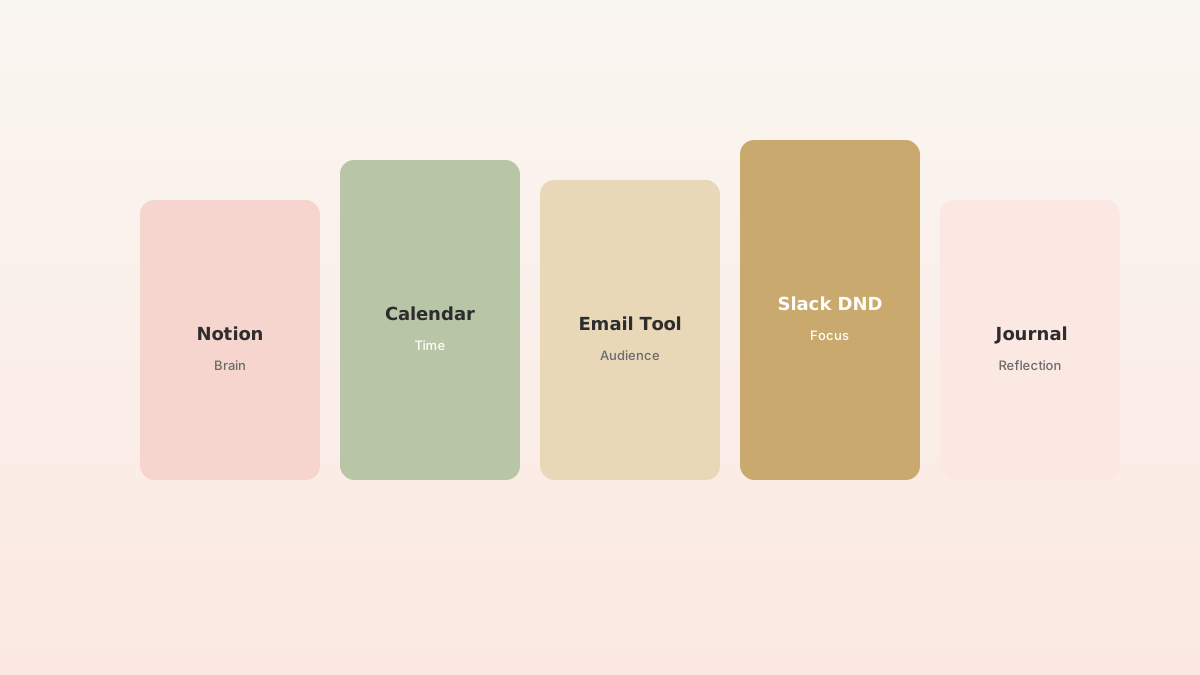
The 5 tools
1. Notion (or Apple Notes) — your single brain
One place where everything lives. Goals, projects, ideas, meeting notes, content drafts, to-do list. The point isn't perfection of the system — it's that you only have to look in one place to find anything. The cognitive load of "where did I put that?" is enormous and invisible. One brain solves it.
2. A real digital calendar — your time, defended
Google Calendar, Apple Calendar, doesn't matter which. The rule: anything that has to happen is on the calendar before it happens, including rest, including breaks, including not-work. If it isn't on the calendar, it doesn't exist.
3. An email tool with batched delivery
Apps like Hey, Superhuman, or Sanebox let you receive email in batches twice a day instead of constantly. This single change reduces context-switching dramatically. I check email at 11 a.m. and 4 p.m. only. The world has not ended.
4. Slack/Teams DND scheduling
Most communication tools let you schedule "do not disturb" windows. Mine is on every weekday from 9 a.m. to noon, and again from 2 to 5 p.m. The world adjusts. This single setting protects two daily focus blocks.
5. A paper journal
Yes, paper. Five minutes morning and night. Three lines each. The morning lines: today's one priority. The evening lines: today's one win. The cumulative effect on burnout is wildly out of proportion to the time spent.
The 4 rituals
1. The 20-minute morning landing
The first 20 minutes of your work day are not for email. Not for Slack. Not for the news. They're for: glancing at your one priority for the day, opening the document you'll work on, starting before the noise begins. The day begins differently when you arrive at it on your own terms.
2. The 90-minute deep work block
One protected block per day, ideally before noon, for the work that actually moves your business forward. Not three blocks. One. Defended like a meeting with the most important client of your life — because that's exactly what it is.
3. The hard stop
One time at which work ends, every day. Mine is 5:30 p.m. The laptop closes. The notifications go off. There is no "just one more email." This is non-negotiable for the same reason airline pilots have flight-time limits — the cost of fatigue is not visible until it's too late.
4. The weekly Sabbath (any day)
One full day per week with zero work. Not light work. Not "checking in." None. Pick the day that fits your life — Sunday for me, Saturday for some friends. The compounding return on a real weekly rest is the single biggest productivity multiplier I know of.
The 1 weekly review that holds it together
Sunday night, 30 minutes, three questions in your journal:
- What worked this week? (Energy gives more clues than to-do lists.)
- What did I avoid? (Avoidance is data, not failure.)
- What is the one most important thing for next week? (Just one. The rest is noise.)
That review takes less time than reading email tomorrow morning. It changes the quality of every week that follows.
Save this for later
Pin this post to your "Productivity" board. Three questions, thirty minutes, every Sunday. The whole stack is built on this.
The signs you're in the early stages of burnout
Catch it early. The warning signs in our community:
- Resenting work you used to enjoy.
- "Quick scroll" sessions that turn into 90-minute holes.
- Sundays getting heavier, not lighter.
- Imposter syndrome flaring up about things you've done well a hundred times.
- Avoiding clients you actually like.
If you're noticing two or more of these, treat it seriously. Cut your workload by 25% for two weeks. Do not negotiate with yourself.
What to do when burnout arrives anyway
Even with the best stack, burnout sometimes arrives. The honest response:
- Lower expectations of yourself for at least 14 days.
- Tell one person — a friend, a therapist, a peer.
- Cut your most-energy-draining client or project, even temporarily.
- Sleep more. Walk more. Try not to make any business decisions for two weeks.
If burnout persists for more than a few weeks, please consider working with a mental health professional. This article isn't a substitute for that.
Frequently asked questions
Doesn't cutting work hours hurt my income?
In the short term, sometimes. In the long term, almost never. Burned-out solo entrepreneurs make worse decisions, charge less, and lose clients. Sustainable hours protect long-term revenue.
I can't take a full day off — I have client deliverables.
Then start with a half day. Build up. The clients who require you to never rest are the clients you eventually need to fire — gently, but firmly.
What if my "deep work" is interrupted by kids or pets?
Real deep work happens in 20-minute blocks for a season of life. That's still meaningful. Don't compare your reality to someone with no caregiving responsibilities.