
Most morning routine advice on the internet was clearly written for someone with no children, no caregiving responsibilities, and apparently no need to enjoy their actual life. The 5am alarm, the cold plunge, the 90-minute deep meditation, the green smoothie, the gym, the journaling, the affirmations — by 9am you've done a half-day of "wellness" and you haven't done a minute of work or seen the people you love.
The gentle morning routine I'm going to describe is, by comparison, almost embarrassingly small. It involves five small choices in the first 90 minutes of the day. There is no alarm change. There is no shower temperature requirement. And it has, completely consistently, doubled the amount of meaningful creative work I produce in a week.
What "doubled output" actually means
Before this routine: I'd reliably produce 1–2 high-quality writing pieces per week. After this routine: 3–4 pieces, often with energy left for client work in the afternoon.
The change wasn't more hours. It was the same hours, used differently — specifically, a 90-minute window of true focus while the rest of the world was still warming up.
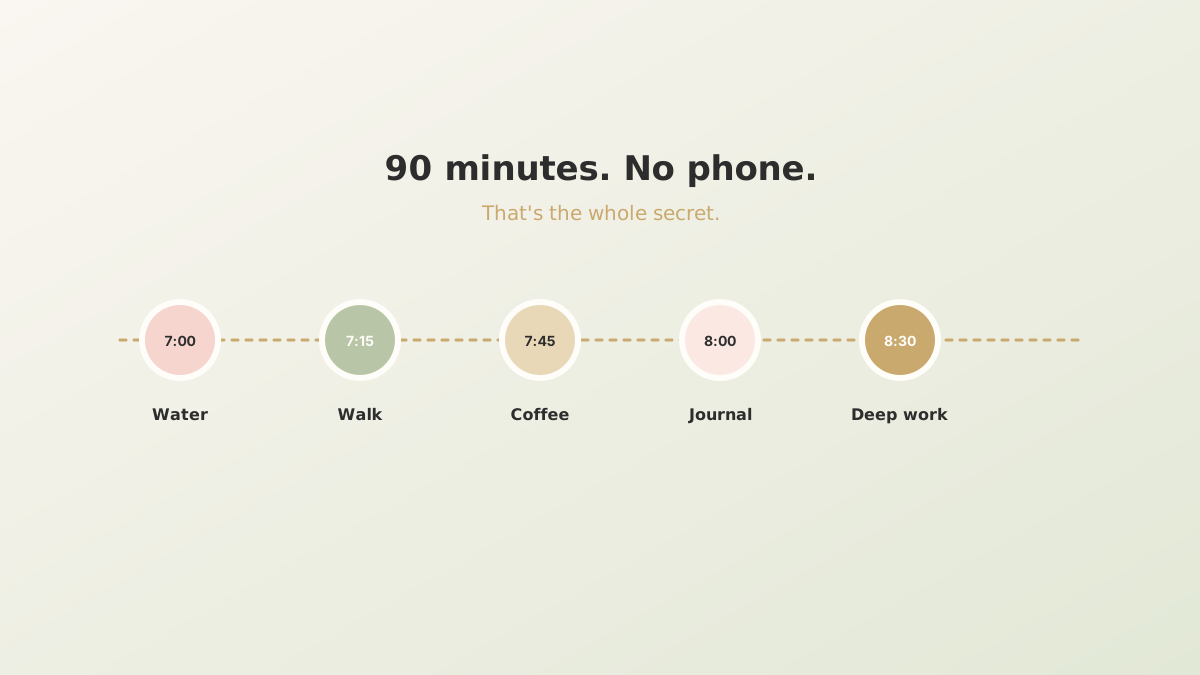
The five small choices
1. Water before phone
The first thing into your body is water, not information. A glass of water sitting next to your bed at night is the simplest possible commitment. It takes 30 seconds. The "no phone first" part is the harder commitment — but the cost of starting your day reactive to other people's priorities is enormous and invisible.
2. A 15-minute walk before any work
Outside if possible. Around the block is enough. Movement before sitting at a desk does something for the brain that no amount of caffeine replicates. If outside isn't an option, even pacing the kitchen for 10 minutes works. The point is gentle movement before screen time.
3. Coffee or tea — slowly
Made deliberately, not microwaved from yesterday. Drunk while sitting somewhere that isn't your desk. Five minutes of doing nothing while a hot beverage cools is a form of small luxury that many of us have stopped giving ourselves.
4. Three lines in a paper journal
One line: how I'm actually feeling. One line: today's one priority. One line: one tiny thing I'm grateful for. Three minutes total. The cumulative effect over months is wildly out of proportion to the time spent.
5. Open the work document — before email
The document you're going to work on for the day. Open it before opening email, Slack, or any social platform. This single act sets up the next 60–90 minutes for actual deep work instead of reactive busywork. The morning is when your brain is sharpest. Spending it on other people's priorities is a tax most of us never knew we were paying.
Why this works (when "perfect" routines don't)
Three things make this version stick where the optimized internet versions fall apart:
- It has no failure mode. Skip a step? The whole thing still works. Most routine advice creates an all-or-nothing dynamic — one missed item collapses the whole structure.
- It scales to your real life. Caregiving morning? Compress to 30 minutes. Quiet day? Stretch to 2 hours. Same five elements, same shape, different lengths.
- It protects the right hour. The first 90 minutes of focused work are genuinely worth more than the next four hours combined. This routine guards them.
What I cut from my old "optimized" routine
For honesty, here's what I used to do that I no longer do:
- 20-minute meditation app session (bored).
- Cold shower (hated it; results unclear).
- Long workout before work (left me too tired to write).
- Reading a chapter of a non-fiction book (turned into doom scrolling).
- Affirmations (felt artificial).
None of these are bad in themselves. They just stopped serving the goal of "make actual work happen this morning." Cutting them gave the morning back its purpose.
What to do when the routine breaks
It will. A sick child, a bad night's sleep, a 6am client call. The routine breaks. You re-set the next day, no guilt. The whole point of "gentle" is that the system survives missed mornings.
The variation for parents and caregivers
If your morning is bookended by school runs or care tasks, here's a 30-minute compressed version:
- Water (1 min)
- Step outside for 5 minutes (5 min)
- Tea/coffee, sitting (5 min)
- One-line journal (1 min)
- Open the work doc, write one paragraph before opening anything else (15 min)
That single paragraph at the start of the day is the entire trick. Everything else is texture.
The compounding effect after 30 days
By week four, three things tend to happen for women who stick with it:
- The 90-minute window becomes sacred without effort. You stop wanting to scroll first.
- Your mid-afternoon energy crash softens (often because you're not running on adrenaline anymore).
- You stop feeling like your business runs you.
That third one — agency over your own day — is the real prize. It changes what's possible.
Save this for tomorrow morning
Pin this post so the five small choices are there when you wake up. The whole routine is in the picture above.
Frequently asked questions
What time should I wake up?
Whatever time gets you 7–8 hours of sleep. The morning routine works at 6am or 9am — what matters is the first 90 minutes after waking, not the clock time.
I'm not a morning person. Will this work for me?
Yes — the principle (focus before reactivity) works at any time of day. If your best work happens at 10pm, run the same five elements at 9pm before your evening writing block.
Can I check email if it's urgent?
Almost nothing is urgent in the first hour of the day. The exceptions are real (sick child, work emergency), and you'll know them. Everything else is the brain's craving for stimulus, not actual urgency.