
The loudest version of "how to grow a blog" tells you to publish three times a week, never miss a day, and treat every weekend as a content sprint. The blogs I admire most — the quietly profitable ones, the ones earning $10K to $40K a month with a single solo writer — almost never operate that way. They publish slowly, edit obsessively, and trust that compound growth is real.
This roadmap is the version I wish I'd had at the start. It's how I'd build a six-figure blog from scratch in 2026 if my goal was income and a livable schedule.
What "six figures" actually requires
Let's start with realistic math. A blog earning $100,000/year typically generates between 80,000 and 250,000 monthly pageviews, depending on niche and monetization mix. That's a wide range because RPMs (revenue per thousand views) vary enormously: lifestyle blogs make $15–$25 per thousand views, finance and B2B can clear $60.
For a women-focused business and online income blog, plan for $25–$40 RPM combining display ads, affiliate income, and a small digital product. That puts your traffic target around 200,000 monthly pageviews — achievable in 18–30 months with a focused strategy.
Why daily publishing is a trap
Daily publishing optimizes for two things: feeling productive and the fear of being forgotten. Neither one is the same as ranking, earning, or growing an audience.
Google rewards depth, internal linking, and proven helpfulness — things that come from one excellent post per week, not seven mediocre ones. A 3,500-word, well-researched cornerstone earns for two to three years. Seven 700-word "thoughts" posts often earn for two to three weeks, then disappear.
If you can write one piece a week that you'd be proud to staple to your forehead, you're building a six-figure asset. If you can't, you're building a content treadmill.
The slow-but-stacking content plan
Here is the publishing schedule I'd actually recommend for a new blog:
- Months 1–3: One cornerstone article every two weeks. Six total. Each 2,500–4,000 words.
- Months 4–9: One cornerstone article per week. Twenty-six total. Begin internally linking aggressively.
- Months 10–18: Maintain one cornerstone per week. Add one short companion piece per week. Update your top five posts every 90 days.
- Months 19+: Switch to maintenance mode. Two cornerstones a month, plus updates. Most of your traffic is now coming from posts older than six months.
Total publishing volume across two years: roughly 90 posts. Compare that to "daily for two years" (730 posts) — and you'll usually find the slower blog earns more, because each piece carries more weight.
Picking topics that actually compound
Most bloggers fail at topic selection, not writing. They pick topics they find personally interesting (good) but that no one is actively searching for (bad). The trick is to find the overlap between your knowledge, reader pain, and search demand.
The 3-bucket topic system
- Income posts: "Best [tool] for [niche]" / "X vs Y" — these earn affiliate revenue.
- Traffic posts: Tutorials, how-tos, and listicles that bring search and Pinterest visitors.
- Trust posts: Personal essays, case studies, and opinion pieces that build email subscribers and brand voice.
A healthy blog publishes roughly 40% income, 40% traffic, 20% trust. Income posts pay the bills. Traffic posts feed them. Trust posts build the audience that keeps coming back.
The five revenue streams of a quiet six-figure blog
- Display ads (35–45% of revenue): AdSense at first, switching to Mediavine or Raptive at ~50K monthly sessions.
- Affiliate income (25–35%): Especially recurring SaaS commissions.
- Digital products (15–25%): A small library of templates, ebooks, or printables.
- Sponsored content (5–15%): One or two sponsored placements per month, never more.
- Email-driven offers (5–10%): A signature course or workshop launched twice a year.
Diversification matters here. Blogs that depend on a single income stream are fragile — when Google updates an algorithm or an ad network changes payout terms, your business can drop overnight.
The weekly schedule that holds it together
The blog I built around this roadmap ran on roughly 12 hours a week:
- Monday (2 hr): Outline and research one post.
- Tuesday (3 hr): Draft.
- Wednesday (2 hr): Edit and SEO polish.
- Thursday (1 hr): Featured image, upload, schedule.
- Friday (2 hr): Pinterest pin design + scheduling.
- Saturday (2 hr): Newsletter writing.
Sundays are off. Always.
What to do in the dip (months 4–9)
Every blog hits a phase where you've been publishing for months but nothing has happened. Traffic is flat. The newsletter has 200 people. Affiliate clicks are zero. This is the moment 80% of bloggers quit. It is also the exact moment Google has just begun crawling and indexing your content seriously.
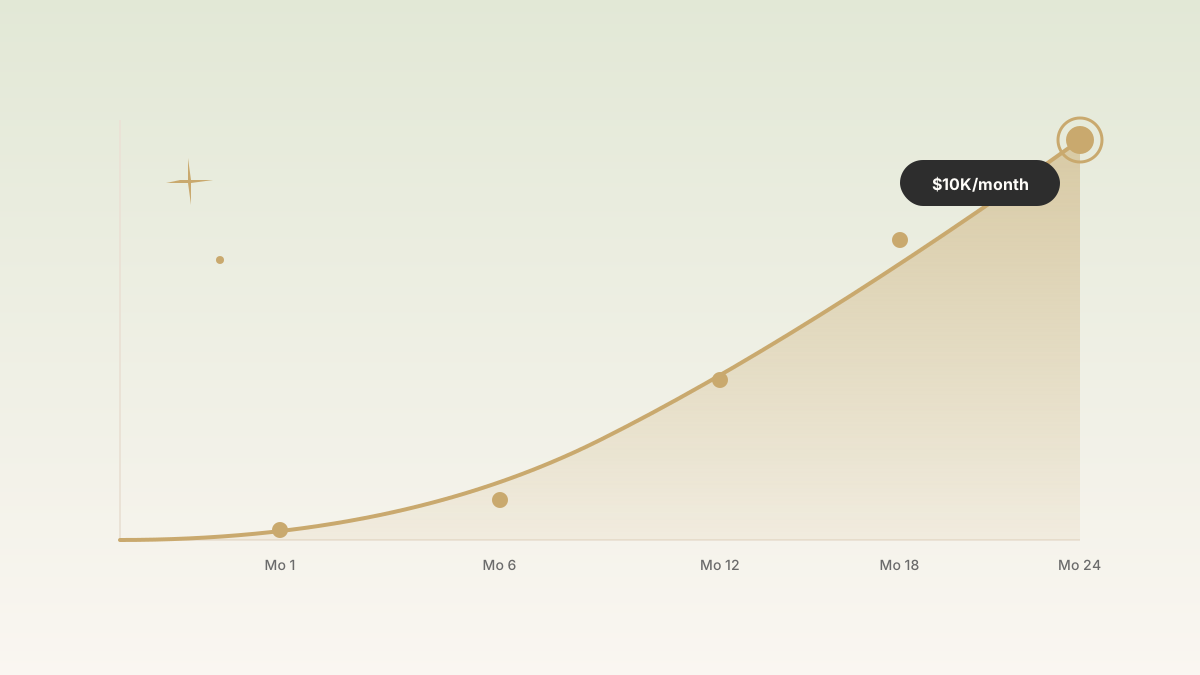
The right response in the dip is boring: keep publishing the cornerstone weekly, audit your three best posts every month, and improve internal linking. Trust that the curve is exponential and the steep part is past month nine.
Soft hustle reminder
The dip is when lasting blogs separate from temporary blogs. Show up calmly, not anxiously. Compound math is on your side.
The three-tab dashboard I check weekly
- Search Console: Are impressions growing on cornerstone posts month over month?
- Email: Net new subscribers minus unsubscribes. Is it positive?
- Income: Total revenue divided by hours worked this week. Trending up?
Three numbers. Twenty minutes a week. Anything else is procrastination dressed up as analysis.
Frequently asked questions
How long until a new blog can apply for AdSense?
Realistically, after 15–25 thoughtful long-form posts plus your full set of legal pages (Privacy, Terms, Disclaimer, Cookie Policy, About, Contact). Quality over quantity for the application.
Do I need to be on every social platform?
No. For most women-focused business and lifestyle blogs, Pinterest plus a newsletter outperforms TikTok plus Instagram by a wide margin in trackable revenue. Pick one social channel that fits how you naturally create.
What if my niche feels saturated?
Almost every niche is "saturated" in aggregate but underserved at the specific intersection where you sit. Niche down to "side hustles for introverted moms" instead of "side hustles." That smaller pool is where the trust and conversion live.