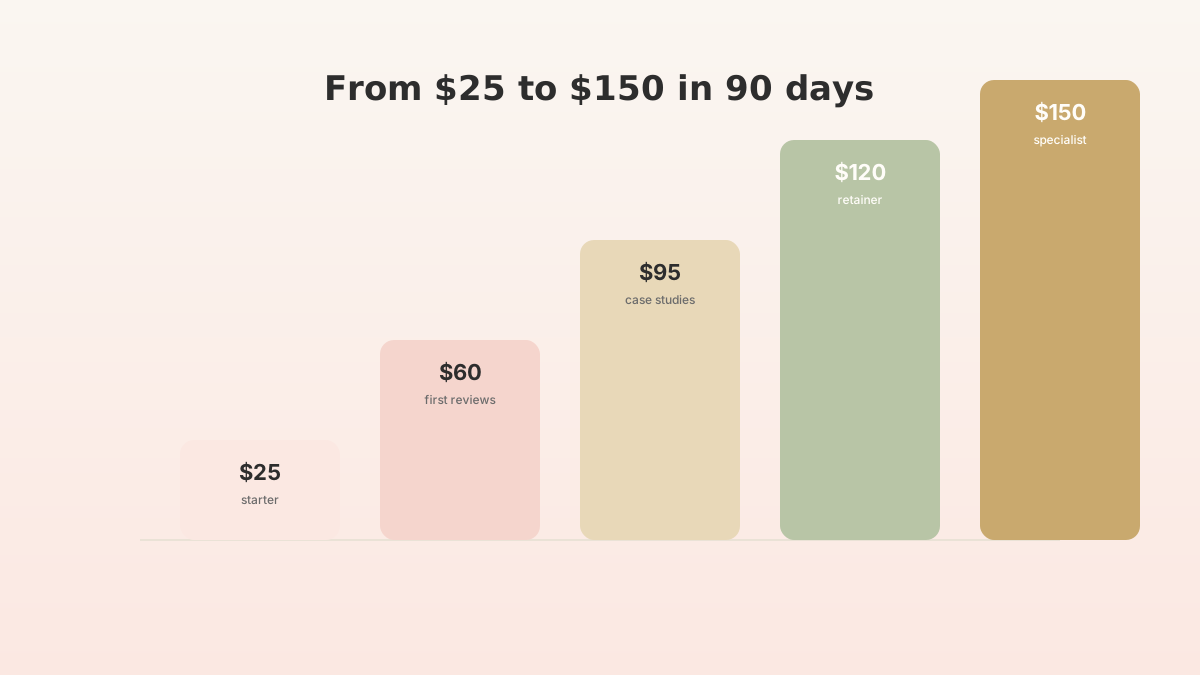
The single most expensive mistake new freelancers make isn't picking the wrong niche or the wrong client. It's pricing too low at the start and getting stuck there. Once you've quoted $25/hour to your first three clients, raising your rate to $80 feels impossible — even though $80 is what your skills are actually worth.
This is the four-step pricing ladder I used to climb from $25/hour to $150/hour in 90 days, the exact wording I used for raise conversations, and the rules that prevented me from getting stuck at any rung along the way.
Why "what to charge" is the wrong question
The right question is: what's the smallest price increase I can defend after I deliver real value? Pricing isn't a static decision. It's a ladder. Each rung corresponds to a piece of evidence you can point to — a result, a testimonial, a case study, a retained client.
Approach pricing this way and "underselling" stops being a permanent identity and becomes a temporary phase you exit one rung at a time.
The 4-rung freelance pricing ladder
Rung 1: The starter rate ($25–$45/hour)
Your first three clients. Zero portfolio, zero results, just willingness to do good work. The starter rate's purpose is purely to build evidence — testimonials, work samples, before-and-after results.
Be honest with yourself: this is a rate you'll only charge for 6–10 weeks total, regardless of how it goes. You're paying for permission to learn on a real engagement.
Rung 2: The "first reviews" rate ($55–$80/hour)
Triggered by your first 2–3 written testimonials. Now your discovery calls open with "here's what my recent clients said." That changes everything.
Common mistake: staying on Rung 1 because the first clients were so kind and you don't want to feel awkward. Don't. Tell them: "Starting next month I'm raising my rate to $X for new clients. You stay at the original rate as long as we work together." That sentence keeps relationships warm and prevents anchor-point trauma.
Rung 3: The case study rate ($85–$110/hour)
Triggered by your first piece of measurable work — a 30% conversion lift, a published article that ranks, a redesigned landing page that doubled email signups. Anything quantifiable.
Now your sales conversations include real outcomes, not just opinions. Pricing-objections drop sharply at this rung because clients can do the math on the ROI themselves.
Rung 4: The specialist rate ($120–$200/hour or value-based packages)
Triggered by becoming the obvious answer to a specific question in a specific niche. "Who do I hire to redesign my Shopify store for women-led wellness brands?" If your name comes up, you're a specialist. Specialists do not compete on hourly rate.
At this rung, most freelancers shift away from hourly rates entirely toward fixed-price packages or monthly retainers, because hourly billing caps your income at your time.
The raise-conversation script
Almost every freelancer I've coached has held off raising rates because the conversation feels scary. Here's the exact wording that has worked for women in our community for years:
"Hi [client], a quick note about my rates. Starting [date 30+ days from now], my rate is moving to $X/hour for all new projects. Anything we already have in flight stays at the current rate. I wanted to give you plenty of notice so you can plan around it. Happy to chat if any questions."
Notice what this does: it's calm, it's specific, it gives notice, it grandfathers in current work, it doesn't apologize, it doesn't justify. About 95% of clients accept without pushing back. The 5% who do push back are usually the clients you'd benefit from losing anyway.
The rules that prevent getting stuck
- Set a deadline for each rung. "I'll be on Rung 2 by April 15" is the only thing that makes a rung climb actually happen.
- Raise your rate for new clients first. Always easier than raising on existing clients. Use the new rate as the visible one; existing clients eventually move up too.
- Tell at least one peer. Public commitment is wildly underrated. Tell a friend you're moving to $80/hour by next month and you almost certainly will.
- Refuse to negotiate down on the new rate. If a client pushes back, you can adjust scope (less work for the original price), but never adjust price for the same scope.
How to handle "your competitor charges $50"
The honest answer: "That may be true. The reason my rate is $X is [specific outcome you deliver]. If price is the most important factor, I'd suggest going with them — I'd hate for either of us to start a project with the wrong fit. If outcomes matter most, here's what working together looks like."
The clients you want hire on outcomes, not on price. Filtering early is a kindness to both sides.
When to switch to fixed-price packages
Three signs it's time:
- You can predict how long a typical project takes within ~20%.
- Your hourly rate makes clients flinch despite the value being clear.
- You're getting good enough that you finish faster than you used to — and your hourly model punishes you for that.
Fixed pricing aligns incentives. The faster you work, the higher your effective hourly rate. The client gets predictability. Everyone wins.
Sample fixed-price packages by industry
- Brand designer: Logo + brand guidelines $1,800–$3,500. Full identity package $4,500–$9,000.
- Web designer: 5-page Squarespace/Webflow site $2,500–$6,000. Full Shopify build $5,000–$15,000.
- Copywriter: Sales page $800–$2,500. Email welcome sequence $600–$1,800. Long-form blog post $400–$1,200.
- Social media manager: Monthly content + posting $800–$2,400 retainer.
- Bookkeeper: Monthly catchup + clean books $300–$900 retainer.
Ranges depend on niche, complexity, and reputation. Use these as starting points, not ceilings.
Save this rate guide
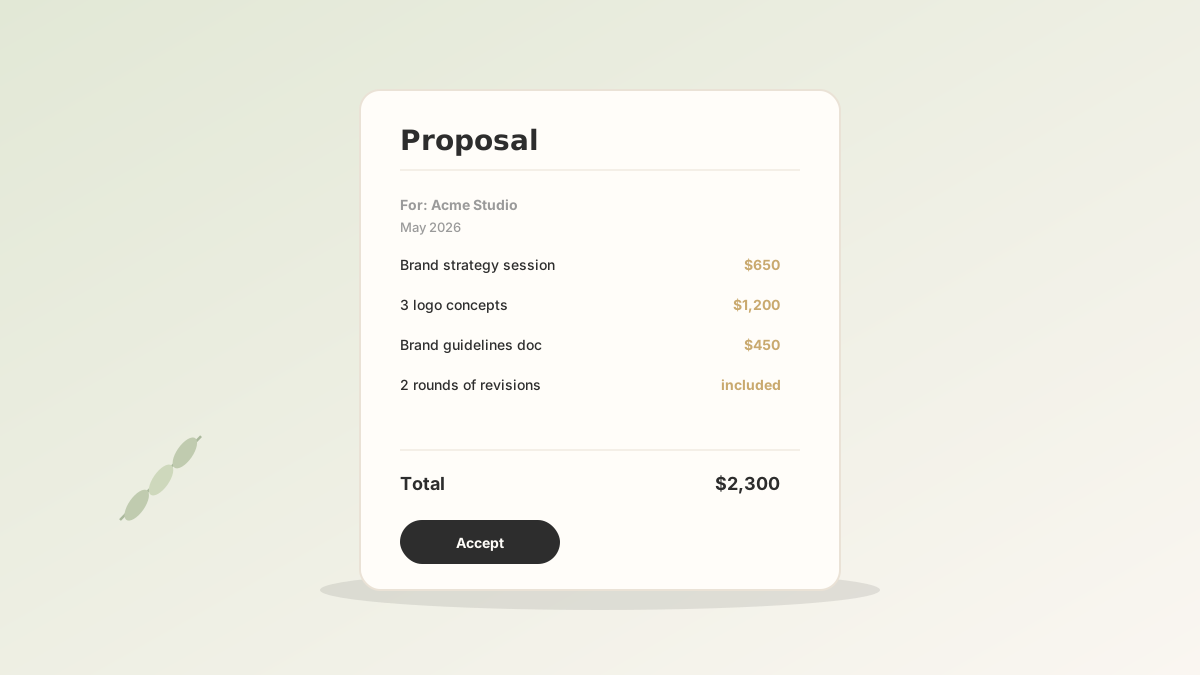
Pin this post so the ladder, scripts, and package ranges are there the next time you have to send a proposal.
The mindset shift that matters most
You are not pricing your time. You are pricing the result your client gets from working with you. Time-based pricing punishes skill. Result-based pricing rewards it. Make the shift early and the rate climb stops feeling scary — it just feels like math.
Frequently asked questions
What if I'm scared to raise rates and lose clients?
Almost certainly you'll lose 5–15% of clients with each major raise — and they're almost always the highest-effort, lowest-trust clients in your roster. The math improves dramatically.
Should I list rates on my website?
Generally yes for fixed packages. Generally no for hourly rates (it limits negotiation). Listing "starting at $X" is a fair compromise.
How often should I raise rates after Rung 4?
Annually for existing clients (5–10% bump), and immediately for new clients whenever your evidence base grows.