
The brand sponsorship world isn't actually shaped the way Instagram makes it look. The big-name influencer deals — the ones with six-figure budgets and aspirational hotel rooms — represent maybe 5% of total brand sponsorship spend. The other 95% goes to micro-creators with audiences between 500 and 25,000 — sometimes through public deals, often through quiet, ongoing relationships nobody posts about.
This is a practical guide to landing your first sponsorship at micro-scale, including the exact pitch template, how to set your rate when you have no precedent, and the negotiation phrases that quietly raise the offer.
Why brands actually want micro-creators
Three reasons, all financial:
- Higher engagement. Micro-audiences trust their creators in a way mega-audiences don't. A 1,200-person newsletter where 50% open your emails delivers more measurable conversion than a 200,000-follower Instagram account where 1.4% see any given post.
- Lower price-per-conversion. Smaller deals with focused audiences usually outperform big-budget influencer plays on a per-dollar basis.
- Brand-safe testing. Smart brands run small sponsorships across many micro-creators to see which audiences convert before scaling up.
Translation: brands need you. They just don't know your name yet. Your job is to make the introduction easy.
The pre-pitch foundation: a one-page media kit
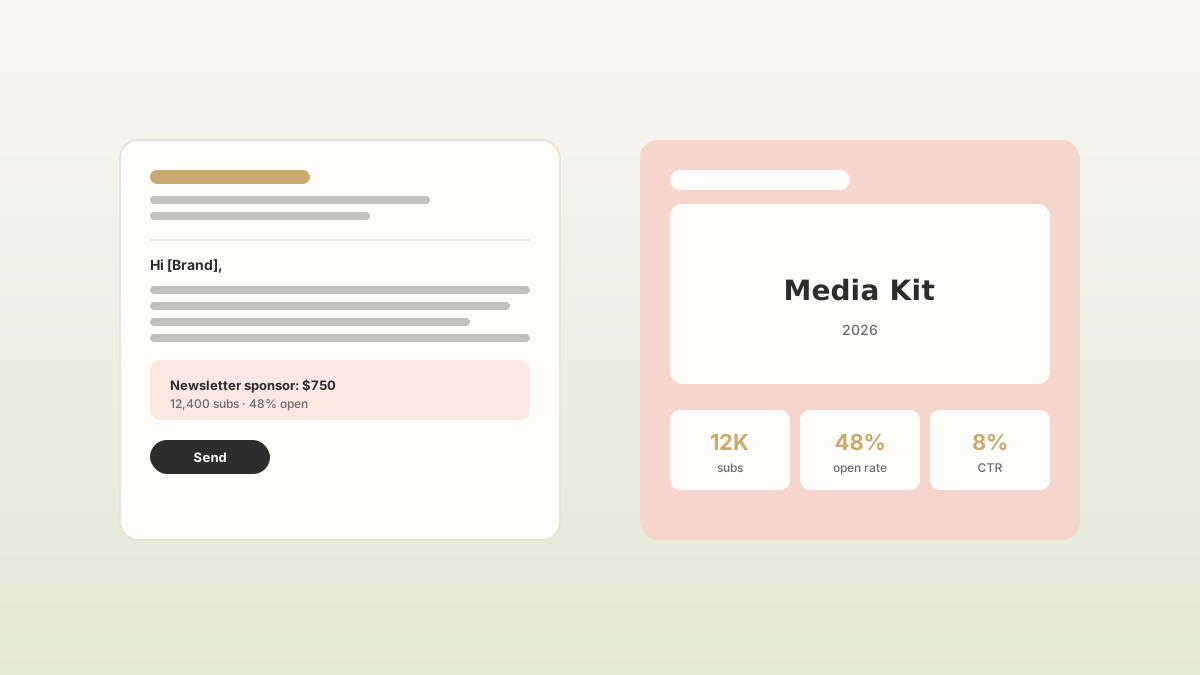
Before you pitch a single brand, build a tiny, beautiful media kit. One page. Canva is fine. Include:
- Your name, photo, and a one-sentence bio.
- Your audience: platform, total size, engagement rate, and audience demographic snapshot.
- Three previous examples of content (even unpaid ones) — screenshots are great.
- Your sponsorship options and rates.
- Your email and one social link.
Save it as a PDF. Attach it to every pitch. The mere act of sending a PDF instead of a text email lifts you out of the "amateur" pile in five seconds.
How to set your first rate (without underselling)
The most common micro-creator rate formula is the "CPM-floor" method:
- For newsletters: Charge $40–$80 per 1,000 active subscribers, per dedicated send.
- For Instagram posts: Charge $80–$200 per 10,000 followers.
- For YouTube integrations: Charge $20–$50 per 1,000 average views, per 60-second integration.
- For blog post sponsorships: Charge $200–$600 per 10,000 monthly pageviews, per dedicated post.
These are floors, not ceilings. If your audience is unusually targeted or wealthy (think: founders, parents, professionals), multiply by 1.5–2.5x. If your engagement rate is exceptional (newsletter open rates over 50%, Instagram engagement over 8%), do the same.
The pitch email template that works
Subject line: "[Brand] x [Your Name] — sponsorship idea"
Hi [first name],
I run [your channel/newsletter/blog] for [specific audience] — about [audience size]+ [unit] of [audience description]. Recently I've been recommending [related product category] and several readers have asked specifically about [brand].
Would you be open to a paid sponsorship in an upcoming [issue/post]? I've attached a one-page media kit with my audience details and rates. My recommendation would be [specific format] for [specific price] in [specific time window].
Happy to share three previous sponsorship examples if helpful.
Warmly,
[Your name]
Notice what this does: it's specific (not "spammy outreach"), it shows you understand your own audience, it proposes a deal instead of asking them to come up with one, and it ends with a low-friction next step.
Who to pitch first
Skip the giant brands at the start. Their procurement processes will eat months of your life. Instead, target:
- Indie SaaS companies in your niche (their decision cycles are 24–72 hours).
- Mid-size DTC brands with active marketing teams.
- Course creators and other infopreneurs who already understand sponsorship math.
- Tools you already use and recommend (warm leads convert highest).
Realistic ratio: 12 cold pitches typically yield 2–3 conversations and 1 paid deal. Don't be discouraged. The math works.
Three negotiation phrases that quietly raise offers
- "What's the budget you've allocated for this?" Always ask. The number they share is almost always higher than the one they would have offered.
- "I can absolutely do that — would it work for two months instead of one for $X?" Bundle to raise total contract value without lowering per-piece rate.
- "That works. I do require [specific term] — happy to send my standard agreement." Asserting professionalism (rather than asking for permission) shifts the dynamic.
The contract clauses to never skip
- 50% deposit upfront. Non-negotiable, especially for first-time partners.
- Net 30 payment terms on the balance — never net 60 or 90.
- Approval rights on creative. You write the copy; they approve, not rewrite.
- Usage rights are limited. The brand can use your content in their owned channels, but not run paid ads with it indefinitely.
- An out clause if the brand requests changes that compromise your editorial integrity.
Save this checklist
Pin this post so the rate formula and contract clauses are there the day a brand actually replies "let's talk."
How to keep the relationship after the first deal
The first sponsorship is the hard one. The fifth one with the same brand is automatic. After every successful campaign, send a one-paragraph wrap email with a screenshot of performance metrics ("Here's how the campaign performed — 3.2% click-through, 28 sign-ups attributed to the link") and a soft proposal for the next one. Brands renew with creators who make their job easy.
Frequently asked questions
Can I really land sponsorships with under 1,000 followers?
Yes — if your audience is highly targeted. Niche communities of 500 engaged readers regularly land $200–$600 deals. Generic audiences of 50,000 often don't.
Should I work with affiliate networks instead?
Both. Affiliate networks (ShareASale, Impact) are useful for ongoing passive income, while direct sponsorships pay better per-piece. The sweet spot is doing both.
What if a brand offers only product instead of money?
Politely decline unless the product is something you genuinely wanted to buy at full price. "I appreciate the offer — for sponsored placements I work on a paid basis. Would you be open to a [specific number] payment for the same scope?"