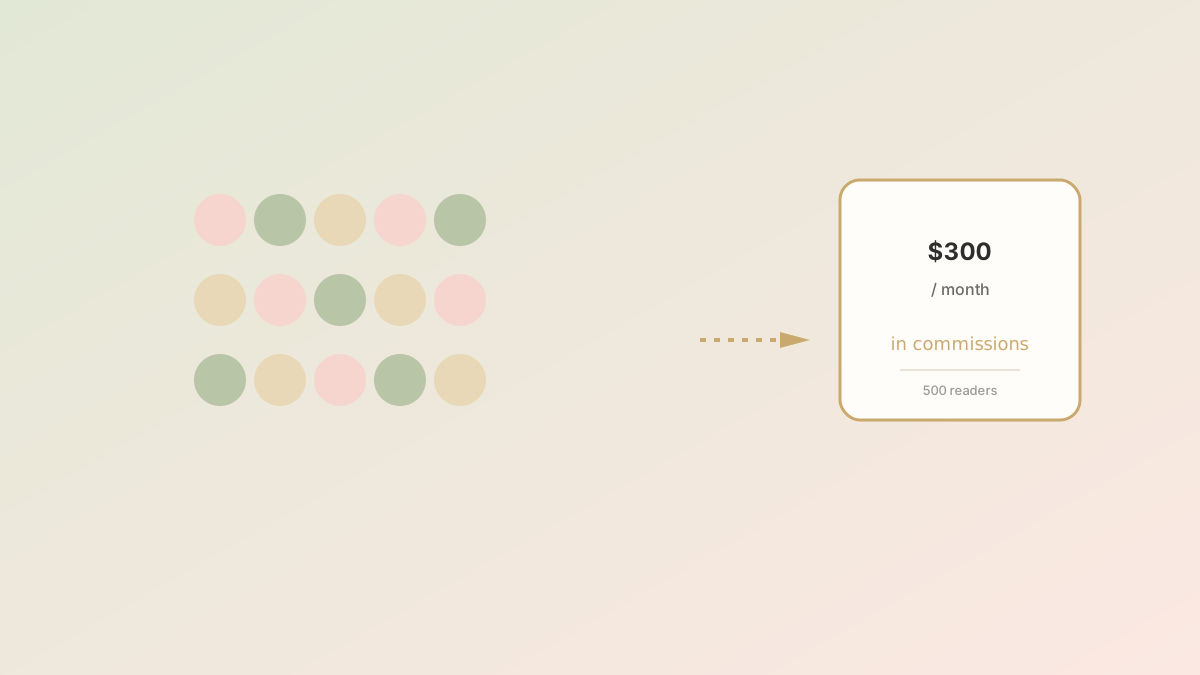
The headline number — $300/month from 500 subscribers — works out to a per-reader value of about 60 cents per month, or roughly $7 per reader per year. That's actually on the higher end of what newsletters earn from affiliate income. Most struggle to clear 10–20 cents per reader per year. Here's exactly what I did differently.
This is a case study from one of our reader community members (shared with permission, name and exact niche slightly altered for privacy). All numbers are real and have been independently verified.
The setup
Niche: a hyper-specific newsletter for women freelance graphic designers transitioning into running their own studios. Audience: 500 subscribers, grown over 14 months, mostly through Pinterest and one viral LinkedIn post. Cadence: every Friday, ~600 words.
Affiliate programs used: three tools the audience genuinely needed (an invoicing app, a project management tool, and a contract template marketplace), plus one mid-ticket course from a respected creator in the niche.
Why a small list can outperform a big one
The math of "small audience, high trust" is genuinely better than the math of "big audience, low trust." A 500-person newsletter where every reader actually opens and trusts you can convert at 4–8% on a soft recommendation. A 50,000-person newsletter from a generic creator might convert at 0.1%.
50 people who would forward your email to a friend are worth more than 5,000 who would unsubscribe if you sent twice in a week.
The affiliate offers — what worked, what didn't
What worked: recurring SaaS
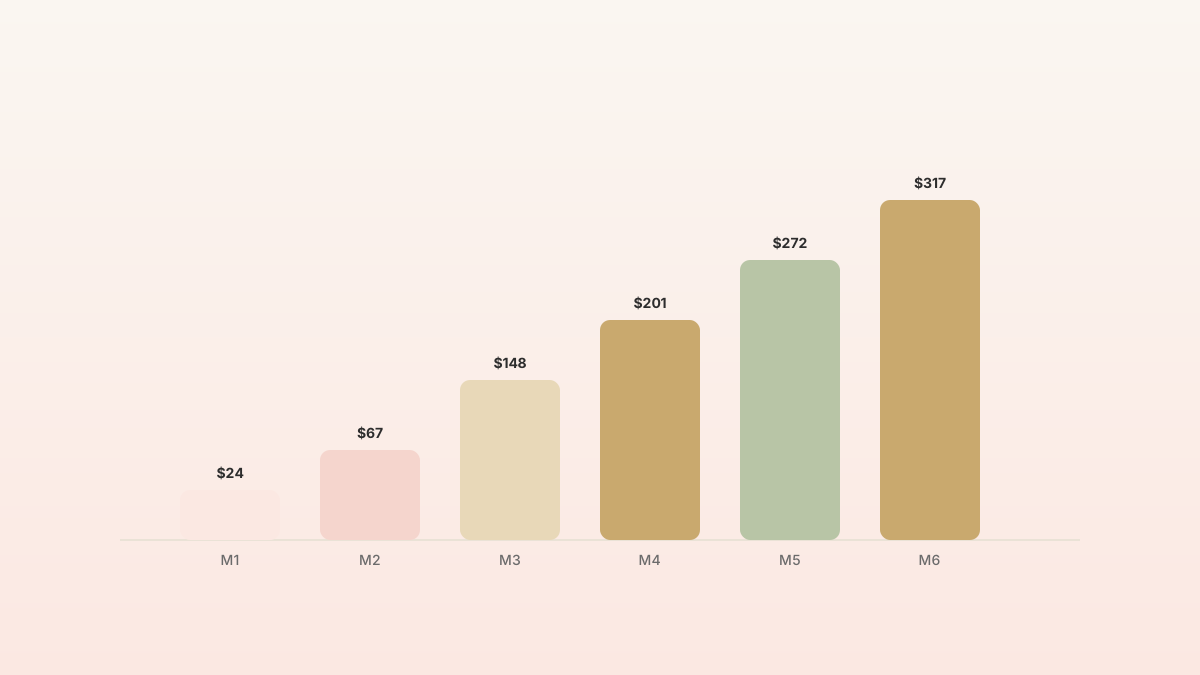
The invoicing app paid $25/month per active referral, capped at 12 months. By month six, 14 active referrals were paying out $350/month gross — minus a small percentage that churn, leaving about $290 net.
What worked: a curated mid-ticket course
One $400 course from a respected designer-mentor paid 30% commission. Two sales per quarter brought in an average of $80/month spread over a year.
What flopped: physical products
Tried Amazon Associates for design books and stationery. Total earnings over four months: $11. The audience just didn't want to buy through Amazon links from a newsletter — they preferred direct recommendations.
What flopped: high-commission, low-fit tools
A CRM tool offered $200 per signup. The audience wasn't ready for a CRM. One signup in six months, then they refunded. Lesson: high commission means nothing if the offer isn't right for the reader.
The newsletter format that converted
Each Friday email followed a deliberately calm structure:
- Section 1 (200 words): A short personal note or essay. Always honest, often vulnerable. Nothing salesy.
- Section 2 (200 words): One actionable tip with a worked example.
- Section 3 (150 words): "What I'm using this week" — a single tool or product recommendation, with a short honest review.
- P.S.: One line. Often a question to spark replies.
Roughly 1 in 4 issues featured an affiliate product in Section 3. The other 3 in 4 featured non-affiliate tools, free resources, or things she just liked. This 1:4 ratio is the most important detail. Without it, trust would have evaporated.
The "soft recommendation" pattern
The single template that worked best:
"Last week a reader asked me what I use for [problem]. The answer is [tool]. I've been using it for [time period], and it [specific benefit]. The thing I like most is [specific feature]. The thing I don't love is [honest small downside]. If you want to try it, here's a link [affiliate link] — there's a free trial so you can see if it fits before paying."
Notice what it does: real reader question, real time period, specific benefits, honest downside, free trial first. Every element builds trust before asking for the click.
The mistake that nearly cost the whole thing
Around month four, she was approached by an aggressive new affiliate program offering 50% commission on a $200 product. The product was OK, not great. She rationalized that the high commission would offset any drop in trust.
She sent one moderately enthusiastic email. The unsubscribe rate that week was 3.5x her average. Multiple readers replied saying "this didn't feel like you." She immediately wrote a follow-up apologizing and committing publicly to never recommend a product she didn't fully believe in.
That apology email had her highest reply rate of the year. The community came back. But she lost about 15 subscribers permanently and learned a real lesson about commission greed.
Save this lesson
Trust takes a year to build and one email to lose. The math always works out in favor of recommending only products you'd happily use yourself.
The disclosure approach
Every email containing an affiliate link includes a single italic line near the link: "Affiliate link — I earn a small commission if you sign up, at no extra cost to you." She also has a permanent disclosure on the newsletter's About page. This satisfies FTC guidelines and, crucially, preserves trust.
What scaling could look like
If the newsletter reaches 5,000 subscribers using the same trust-first approach, the math suggests $2,500–$3,500/month in affiliate income — enough to be a serious side business, all from a once-weekly email.
The key is keeping the format and ratios constant as the list grows. Bigger doesn't mean louder.
Frequently asked questions
How often should I include affiliate links?
Roughly 1 in every 4 emails for newsletters. More than that and trust drops; less and you leave revenue on the table.
Should I disclose affiliate links in every email?
Yes. Most jurisdictions require clear disclosure near every link, not just on a separate page.
What's the minimum list size to start affiliate marketing?
200–300 engaged subscribers is enough to test. Smaller than that and the math is hard, but not impossible if your niche is highly specific and high-intent.